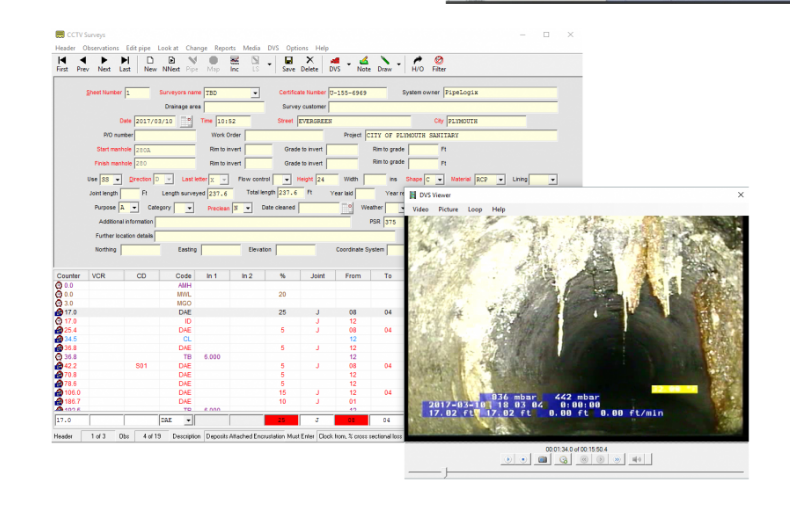
Counter column (The values are different between the video footage and the access database):
Answer from James Burn-GM blueplan:
My understanding is that this stems back to when VHS tapes were used, and this would be the counter mark so that if the distance reading was off, you could find a defect on the VCR tape more easily.I’m not sure if it’s actually “in use” these days, but I have used it before to help keep zoom camera observations organized.
What is the practice? Are we zooming in to the defect area and then traveling back and annotation? Which frame position are we doing the annotation?
In Canada, it is required to provide a perspective view of the defect and the entire circumference of the surrounding pipe when entered the code.
In the USA, people entered the code on top of the defect. The USA also uses a perspective view of the defect.
Panning and tilting may be useful to provide adequate detail about a defect, but does not provide the perspective view of the defect and surrounding pipe. If a closer view of the defect is needed, the close view can be obtained in addition to the perspective view
90% of the time, collecting and coding are done at the same time. However, it can be done separately
right now, Pacp are using access database as exchange data standard. Is there going to be other format in the future, sqlite.
Yes. It has been approved one year ago to move from access database to sqlite.
Additional Info
Who annotates the video and when?
The coding can be done at the same time as the surveying in the CCTV truck. However, it can also be done in the office.
Where are the annotations coming from?
The coding is done using the PACP certified software.
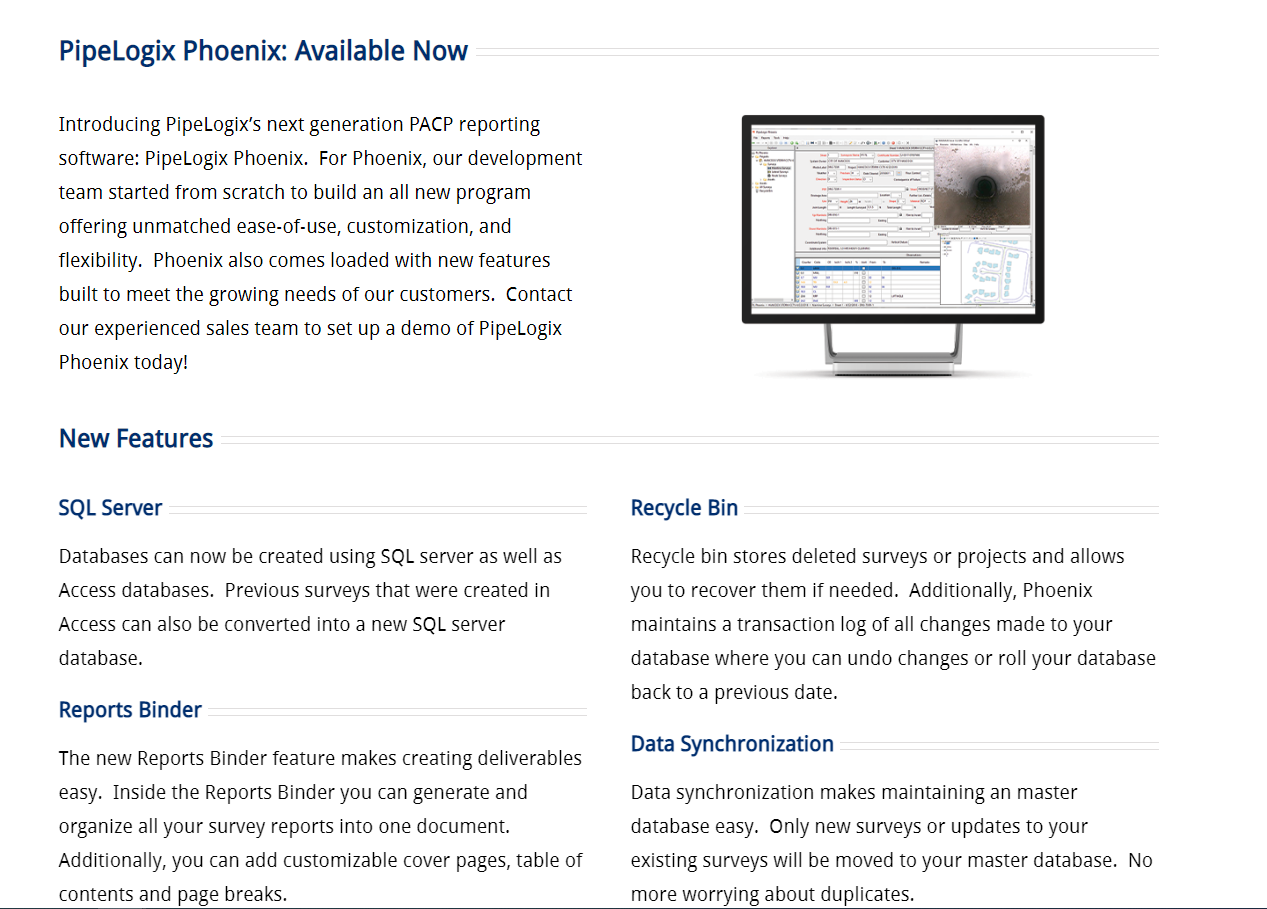
The contractor hired by DNV used the software Phoenix (formerly known as pipeLogix Phoenix)